Light meets precision with a click
Interview with Dr. Benoit Habermeyer
Brief Introduction of who you are
Dr. Benoit Habermeyer is the co-founder and Chief Executive Officer of PorphyChem, a chemical company based in Dijon, France. He holds a PhD in organic chemistry from the University of Burgundy, specializing in porphyrin and phthalocyanine chemistry. Within the SCALPEL project, he oversees the synthesis of porphyrin-based photosensitizers designed to initiate the production of reactive oxygen species.
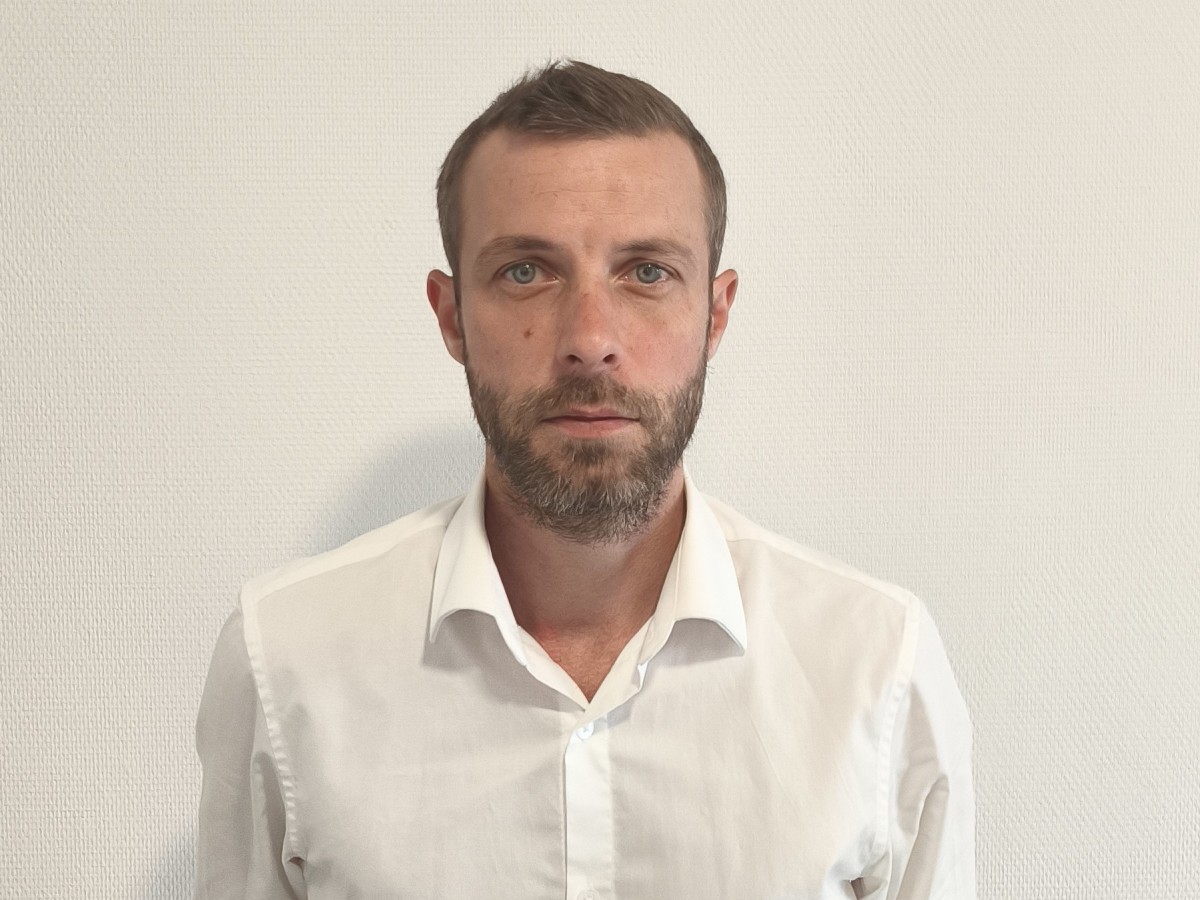
- Can you tell us about your scientific journey and what first attracted you to chemistry?
I discovered organic chemistry at the Besançon University Institute of Technology in France, and it was during my second-year internship at LIMSAG (University of Burgundy) that I first encountered porphyrin chemistry. Right then, I knew that I wanted to dedicate my career to these remarkable molecules.
- For readers who may not be familiar with PorphyChem, what does the company do and what makes it unique?
PorphyChem is a company exclusively specialized in the synthesis of porphyrins, phthalocyanines, and related compounds for research and industrial applications. PorphyChem holds a catalog of over 700 photosensitizers based on porphyrins and related molecules—a collection that is truly unique in the world.
- Porphyrins are central to much of PorphyChem's work. What makes these molecules so fascinating from a scientific perspective?
Porphyrins are the universal pigments of life. They are represented by chlorophyll in green plants, which drives photosynthesis, and by heme in animals and humans, which is essential to the respiratory chain. The physicochemical properties of these molecules allow us to address numerous socioeconomic challenges, while the technical difficulty of synthesizing them offers a deeply rewarding challenge for any chemist.
- Your work often involves designing and developing highly specialized molecules. What is the most rewarding part of that process?
The most rewarding part is seeing a molecule find a real-world application that answers a concrete need in society. That mission is at the core of why we founded PorphyChem.
- SCALPEL brings together experts from many different fields. What excites you most about working in such a multidisciplinary environment?
Exploring scientific domains outside my own is always exhilarating. Beyond that, collaborating with researchers from other disciplines helps us understand their specific challenges and needs, which can often differ significantly from those of a chemist.
- One of the challenges in research is moving from promising scientific concepts to practical applications. What does that journey look like from a chemist's perspective?
At PorphyChem, we always stay closely connected to the real-world application of our molecules. It is a path we know well—and one that can be fraught with obstacles, given the inherent inertia of the socioeconomic landscape when it comes to innovation. Bringing a new technology to market is a long and demanding journey, but seeing it succeed is immensely rewarding.
- As an industry partner in a European research project, what perspective does PorphyChem bring that complements academic research?
PorphyChem brings a market-oriented vision that complements the academic approach. Thanks to our thirteen years of industry experience, we understand market hesitation toward new technologies, and we have learned how to design molecules that stand a better chance of commercial adoption.
- What has been the most valuable lesson you have learned through your involvement in collaborative international projects?
You can design the most "beautiful" and high-performing molecule in the world, but that alone does not guarantee market success.
- Looking to the future, what developments in chemistry are you most excited to see over the next decade?
Returning to the topic of my thesis, I hope to one day see the emergence of a reliable, highly efficient technology that artificializes photosynthesis to produce clean energy.